
Choosing new flooring might seem simple at first. You like hardwood floors, so go with those, right? But the demands of real life, including moisture exposure, the amount of foot traffic you get, heating systems, and building type, all influence how a floor behaves over time. Many homeowners start with solid wood in mind, only to realize that it won’t respond well to all real-life living conditions.
That’s why engineered hardwood flooring is growing in popularity because it addresses many of those everyday concerns without losing the warmth of natural wood. Its layered construction reacts to its surroundings, especially in homes that deal with temperature shifts or moisture exposure.
Keep reading to understand where engineered hardwood flooring performs better than solid wood and why it often makes more sense for Canadian homes.
Where Does Engineered Hardwood Flooring Perform Best in Challenging Environments?
Some parts of a home put constant pressure on flooring materials. Changes in humidity, heat, and air movement can all slowly affect wood products. Here are the types of spaces where engineered flooring handles these challenges more reliably than solid wood.
Areas with Moisture Fluctuations
Moisture does not need to be visible to cause problems. Daily activities such as cooking, showering, and running appliances add humidity to the air. Solid wood reacts by absorbing moisture, which can lead to swelling or surface gaps as conditions change.
Engineered hardwood flooring handles these shifts more effectively because of its layered structure. The top layer (or veneer) is solid wood, while the lower layers are arranged in opposing directions. This construction reduces the movement that typically happens with moisture exposure.
For homeowners in cities like Toronto that experience humid summers and dry winters, this difference directly affects how the floor looks and feels year after year.
Basements and Below Grade Spaces
Basements present a challenge for solid wood. Even when moisture barriers are installed, below grade spaces tend to hold higher humidity levels. Concrete subfloors can release moisture long after construction ends, which puts solid wood at risk of cupping or warping.
But engineered hardwood flooring is often approved for basement use because it tolerates these conditions better. Many products can be installed as floating floors, which allows for slight movement without damaging the boards. This makes engineered hardwood flooring a practical option in Toronto homes with finished basements, as it adds warmth without homeowners having to constantly worry about moisture damage.
Rooms with Temperature Variations
Temperature changes affect wood in subtle ways. Rooms above garages, sunrooms, and areas with large windows experience wider swings throughout the year. Solid wood expands and contracts more noticeably under these conditions, which can create gaps or raised edges over time.
Engineered hardwood flooring responds more predictably because the core layers limit expansion across the width of each board. This helps the floor remain visually consistent even as temperatures shift. For households that experience strong seasonal contrasts, this behaviour reduces long term maintenance concerns.
Homes with Radiant Heating Systems
Radiant heating introduces warmth directly beneath the floor surface. Solid wood can dry out under continuous heat, leading to surface cracks or separation between boards. Many manufacturers restrict or completely discourage the use of solid wood in favour of radiant systems.
Engineered hardwood flooring is commonly designed with radiant heating compatibility in mind. The layered construction distributes heat more evenly and reduces stress on the wood surface. This allows homeowners to enjoy underfloor heating without compromising the integrity of the flooring material.
Spaces That Require Long-Term Structural Stability
Long hallways, open concept layouts, and large living spaces place more stress on wood floors due to their size. Solid wood boards can struggle in these settings, especially if humidity control is not perfect.
Engineered hardwood flooring offers better dimensional control across wider spans. That’s because the internal layers work together to resist movement, which helps maintain tight joints and a flat surface. This stability becomes especially important in larger homes or renovated spaces where consistent conditions are harder to maintain.
When Engineered Hardwood Flooring Is the Smarter, More Practical Choice
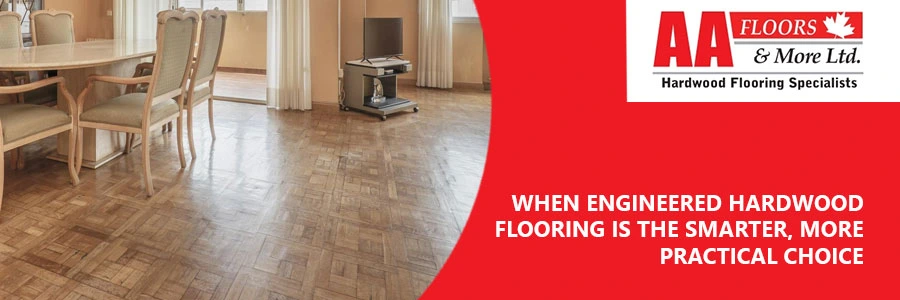
Beyond environmental factors, practical considerations often shape flooring decisions just as much as appearance. Let’s look at situations where engineered flooring offers clearer advantages in installation, design flexibility, and everyday use.
Lifestyles That Involve Heavy Daily Use
Busy households put a lot of demands on floors. Foot traffic, pets, and furniture movement gradually affect wood surfaces. Solid wood floors can show wear patterns more quickly in high-use areas.
Engineered hardwood flooring distributes stress more evenly across its structure. While the surface is still real wood, the support beneath helps reduce long-term distortion. This makes it a suitable choice for families who want natural wood without the higher risk of surface issues tied to daily use.
Projects Requiring Faster Installation
How long it takes to install new flooring matters for both homeowners and contractors. Solid wood often requires acclimation periods and specific fastening methods that extend project timelines. Nail-down installations also demand a suitable subfloor, which may require advance notice to have in stock.
Engineered hardwood flooring offers more flexibility. Many of these products support floating or glue-down installation, which reduces preparation time. This is especially helpful for renovation projects where schedules are tight or living arrangements depend on quick completion.
Designs That Call for Wider or Longer Planks
Design preferences have shifted toward wider and longer boards. Solid wood in these dimensions can be prone to movement, especially in changing climates. This limits the availability of stable wide-plank options.
Engineered hardwood flooring supports larger board sizes without increasing the risk of warping. The layered core helps wide planks remain flat and secure. This allows homeowners to achieve modern design goals without sacrificing performance.
Homes Needing a Consistent Appearance
Over time, solid wood floors can develop uneven gaps or slight height differences between boards. These changes are often subtle but noticeable in well-lit spaces. They can affect how furniture sits and how light reflects across the surface.
Engineered hardwood flooring maintains a more consistent surface because movement is reduced. This consistency matters in open areas where flooring runs through multiple rooms. It also supports long-term satisfaction by preserving the original appearance of the installation.
Budgets That Demand Better Cost Control
Cost is not limited to the purchase price. Installation complexity, repairs, and potential replacement all affect the long-term value of your flooring. Solid wood can become expensive when environmental issues lead to repairs or refinishing being needed sooner than expected.
Engineered hardwood flooring often provides better cost predictability. Installation methods are more flexible, and the risk of moisture-related damage is lower. For homeowners comparing the best engineered hardwood flooring in Canada, this balance of price and performance plays a major role in decision making.
Choosing the right wood floor depends on how a home functions over time, not just how it looks on day one. This is why engineered hardwood flooring often proves to be a practical choice in spaces affected by moisture, temperature changes, or daily wear. Its layered structure supports consistency in areas where solid wood may struggle. For homeowners exploring engineered hardwood flooring in Toronto, guidance matters. AA Floors & More helps clients identify flooring products that suit their real living conditions, including access to some of the best engineered hardwood flooring Canada offers. With expert insight, this type of flooring can deliver lasting value and peace of mind.
AA Floors & More Ltd.
524 Evans Ave
Etobicoke ON
M8W 2V4
TELEPHONE : (416) 201-9611
Click here to send Email
OPENING HOURS
Monday-Friday 8:00 am – 6:00 pm
Saturday 9:30 am – 3:30 pm
Sunday-Closed