
The finishing on your wooden floors makes a difference in the look of the grain, how it reflects light, and the room’s colour pattern. Most Toronto homeowners care most about selecting their wooden floor’s species and forget about the finish. But the latter is definitely something you should take into consideration before deciding on the former.
A well-chosen finish can make an average plank look refined, while a poor choice can flatten even the most beautiful wood. This decision deserves as much attention as any other part of the flooring process.
The same plank looks completely different depending on its finish. Oil reads rustic, matte reads clean, and gloss reads formal. Choosing the right finish is what makes wood flooring truly timeless.
In this blog, you will learn which finish types are available for wood flooring in Toronto homes and what makes each one the right or wrong fit for your space.
What a Floor Finish Actually Does
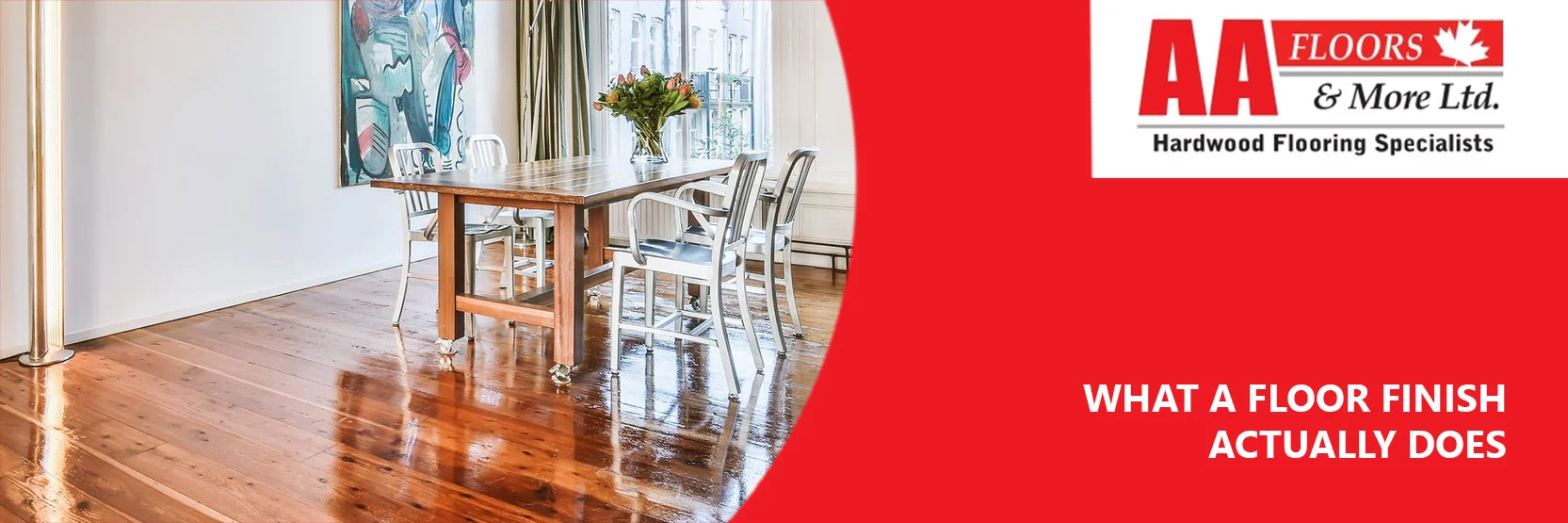
The purpose of a floor finish is to protect the wood from moisture damage and wear and tear. It also controls how shiny the surface looks, how deep the colour appears, and how clearly the grain shows through. Protection and appearance are both determined by the finish.
The Difference Between Surface and Penetrating Finishes
These two categories represent two different approaches to wood protection. A surface finish sits on top of the wood and forms a hard film. A penetrating finish soaks into the wood fibres and hardens from within.
- Surface finishes include polyurethane and aluminum oxide. They form a visible layer above the wood and resist scratches and moisture effectively.
- Penetrating finishes include oil and hardwax-oil products. They do not create a film. The wood itself becomes the finished surface.
Surface finishes are easier to maintain day-to-day. Penetrating finishes require more frequent reapplication but allow for spot repairs without refinishing the entire floor.
Why Finish Changes How Colour Reads
The finish changes colour perception because it affects how light bounces off the surface. A high-gloss finish reflects more light and makes colours appear brighter. A matte finish absorbs light and makes the same colour look deeper and more natural.
- Lighter species like ash or maple can look stark under gloss.
- The same species under matte reads as warmer and more understated.
- Dark woods like walnut gain richness under oil but lose depth under heavy gloss.
Two floors built from identical planks can look completely different depending solely on the finish applied.
Matte and Low-Sheen Finishes
Matte finishes reflect very little light, which means everyday scuffs and fine scratches are far less visible than on glossier surfaces. The result is a floor that holds its appearance under real daily conditions.
Why a Matte Finish Works in High-Traffic Toronto Homes
Families with children or pets benefit most from matte finishes. This is because surface wear is less visible between cleaning sessions, and the floor stays consistent throughout the week.
- Matte finishes do not show footprints or smudges the way gloss does.
- In rooms with direct sunlight, matte finishes hide surface imperfections that a glossy finish would make clearly visible.
- In open concept homes, a matte finish keeps the floor from competing visually with walls or furniture.
For homeowners researching timeless wood flooring options for Toronto homes, matte is often the most practical finish to start with. It suits most design styles and holds its look longer between refinishing cycles.
How Matte Interacts With Wood Grain
The natural pattern of the wood shows more clearly under a matte finish because no sheen layer sits on top to mask it. This works well with wood that has natural knots and visible variation built into the plank.
- Wide-plank oak with a matte finish looks natural and understated; closer to how the wood looks in its raw state.
- Tight-grained maple under matte looks clean and contemporary without feeling cold.
- Hand-scraped textures pair best with matte because the texture itself provides visual interest.
Satin Finishes
Satin has more sheen than matte but less than gloss. It scatters light to a certain degree, without allowing the surface to appear too shiny. Many homeowners in Toronto find satin finish the most versatile one for most areas of their homes.
Where Satin Performs Best
Satin is versatile. It suits transitional interiors where you find a blend of traditional and modern elements. It also works well where you want warmth and gentle light reflection without the extra cleaning and maintenance that gloss requires.
- Dining and living rooms benefit from satin because the slight sheen adds a sense of refinement without excess.
- Hallways with natural light look polished under satin without appearing overly reflective at certain angles.
- Satin holds up well in areas with moderate foot traffic, making it reliable for most main-floor applications.
The Visual Weight of a Satin Finish
Satin adds a subtle richness that matte cannot quite replicate. The slight sheen amplifies depth in darker wood tones. On medium-toned species like white oak or hickory, it creates a balanced, natural appearance.
- A satin-finished white oak floor reads as both warm and refined.
- On darker species, satin brings out tonal variation in the grain without making the floor look lacquered.
- For homeowners who want a floor that looks balanced in photos and feels warm in person, satin is a reliable choice.
Oil and Hardwax-Oil Finishes
Oil finishes penetrate the wood rather than coating it. The result is a floor that looks and feels like bare wood. No film sits on the surface. The texture of the wood is fully present to the touch, giving oil-finished floors a natural quality that surface-coated floors cannot replicate.
What Makes Oil Finishes Distinct
The look of an oil finish is fundamentally different from any surface coating. The wood retains its natural matte appearance. The wood grain is clearly visible, and the floor feels warm in a way that polyurethane-coated floors do not.
- Oil finishes work well with wood species that have a bold, clearly visible grain pattern, like European oak or American walnut.
- They pair naturally with brushed or hand-scraped textures because the oil does not fill the texture the way a film finish does.
- Homeowners looking to incorporate timeless wood flooring into modern interior designs often choose oil on wide-plank oak. It is one of the most consistent approaches in contemporary Toronto interiors.
Maintenance Requirements for Oil Finishes
The trade-off with oil finishes is their maintenance. They require reapplication roughly once a year in high-traffic areas. Spot repairs are straightforward because you can apply oil to a single board without disturbing the rest of the floor.
- Spills must be wiped promptly, as oil finishes offer less moisture resistance than polyurethane.
- Control indoor moisture levels carefully with oil-finished floors. Toronto’s seasonal humidity swings affect penetrating finishes more directly than surface coatings.
- Dedicated oil-based cleaning products are necessary, as standard floor cleaners can strip the finish over time.
Aluminum Oxide Finishes
Aluminum oxide is a factory-applied finish used on most prefinished hardwood and engineered flooring. It is one of the hardest finishes available for residential floors, applied in multiple coats during manufacturing under controlled conditions.
Why Aluminum Oxide Dominates the Prefinished Market
The durability of aluminum oxide is the main reason it is the default finish on most prefinished products. It holds up under heavy foot traffic and resists surface scratching better than most site-applied options.
- Most prefinished wood flooring in Toronto homes is protected by an aluminum oxide coating, applied during manufacturing before the product reaches the showroom.
- The finish is available in matte, satin, and semi-gloss sheens, giving homeowners aesthetic choice within a highly durable product.
Where Aluminum Oxide Has Limits
Aluminum oxide cannot be sanded and recoated the way solid hardwood can. With solid hardwood, you apply the finish after installation and can renew it multiple times. With aluminum oxide, once the finish wears through, you typically need to replace the plank.
- This makes it less flexible over the long term than solid hardwood with a site-applied finish.
- In engineered flooring designed for Toronto’s humidity conditions, the durability trade-off is generally worth accepting.
- The factory application produces a more consistent result than most site-applied coats.
Matching Finish Type to Your Home’s Interior
Your floor’s finish has to work with the rest of your interiors. A mismatched finish can make a beautiful floor feel wrong in its space, regardless of the wood species or colour selected.
Matching Finish to Design Style
Toronto homes span a wide range of design eras and styles. Your choice of finish should reflect the visual language of the space it inhabits.
- Traditional interiors with warm lighting and detailed millwork suit satin or semi-gloss finishes.
- Modern minimalist spaces with flat ceilings and neutral palettes work best with matte or oil finishes.
- Industrial-style interiors using exposed brick or concrete alongside wood flooring are best served by a wire-brushed plank with an oil or matte finish.
How Light Levels Affect Finish Choice
Natural light changes how a finish reads throughout the day. A finish that looks balanced in a showroom can behave differently in a north-facing Toronto bedroom or a sun-filled south-facing living room.
- North-facing rooms with limited natural light benefit from satin, which adds gentle brightness without harsh reflection.
- South-facing rooms with strong afternoon sun are better served by matte, which absorbs rather than amplifies the light.
- If a room receives both direct and indirect light at different times, satin is generally the most consistent and reliable performer.
Finish type shapes everything about how a wood floor reads in a room. It affects the wood’s colour, grain visibility, daily maintenance, and how well the floor fits the overall design of the home. Matte and oil give natural, understated results. Satin offers reliable performance across most spaces. Gloss suits specific low-traffic settings, and aluminum oxide prefinished options balance durability with convenience. Selecting flooring that is genuinely wood-based and lasting means thinking beyond colour chips and species names. The finish is where your timeless wood flooring is either won or lost. If you are ready to make that decision with confidence, AA Floors & More Ltd. has the expertise and product range to guide you.
AA Floors & More Ltd.
524 Evans Ave Etobicoke ON M8W 2V4
TELEPHONE : (416) 201-9611
Click here to send Email
OPENING HOURS
Monday-Friday 8:00 am – 6:00 pm
Saturday 9:30 am – 3:30 pm
Sunday-Closed