
Canada is a country of climate extremes. Indoor humidity can drop to 15% during a dry Alberta winter and climb past 75% in a humid Ontario summer. Most Canadian homeowners never think about how those humidity and temperature swings affect their hardwood floors, but they should.
Wood moves with moisture. It expands when humidity rises and contracts when the air dries out. This is not a flaw in the material; it is simply how wood behaves. The question is whether your floor is built to handle that movement gracefully or fight against it.
Not all flooring handles this challenge equally well. The construction of a floor, its core material, its wear layer, and how it was installed all determine whether it lasts decades or starts failing within a few winters.
Picking up the best engineered hardwood flooring for your Canadian home starts with understanding what your local climate demands from a floor. Keep reading to learn exactly what that means and how to use that information when you shop.
Why Wood Floors Move and Why That Is Not Always a Problem
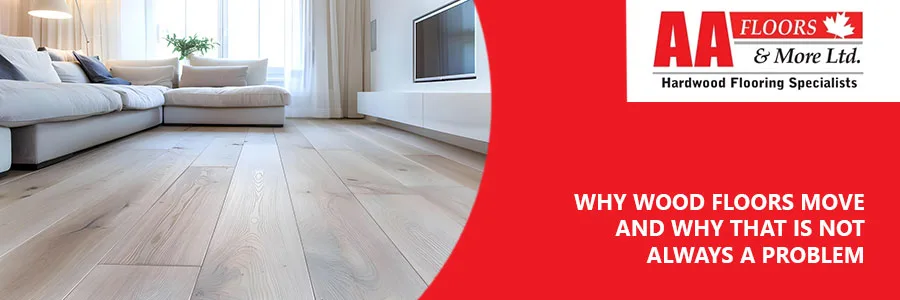
Wood has been used as a flooring material for centuries. But many homeowners are still surprised when their floors gap in January or squeak in July. Understanding why this happens is the first step toward choosing a floor that handles these changes well.
What Relative Humidity Does to Wood Floors
Relative humidity, or RH, is the amount of moisture in the air relative to what the air can hold at a given temperature. Wood fibres absorb moisture when RH rises and release it when RH drops. This process is called moisture cycling, and it causes wood to physically change.
- In Canadian winters, home heating systems run continuously and dry out the indoor air, pulling RH down to 15–25%.
- In summer, especially in homes without central air conditioning, RH can climb above 70%.
- This range is far wider than what most wood floors are rated to handle without movement.
The result is visible: gaps appear between planks in winter and boards may cup or crown slightly in summer. These are not always signs of a defective floor, but of a floor reacting to conditions it was not matched to.
How Solid Hardwood Responds to Canadian Conditions
Solid hardwood is milled from a single piece of wood. Because the grain runs in one direction throughout the plank, the entire board expands and contracts together. In stable climates, this is manageable. In Canada, it becomes a challenge.
- Wide solid planks move more than narrow ones because there is more material to expand.
- Solid hardwood installed over a concrete basement slab is especially vulnerable to moisture from below.
- Many solid hardwood warranties are voided when installed in high-humidity or below-grade spaces.
This is not a reason to avoid solid hardwood entirely. It simply explains why engineered hardwood flooring has become the most practical choice for homeowners across Canada looking for the best long-term result.
What Is Engineered Hardwood Flooring and How Is It Built
Engineered hardwood is not a synthetic product. It is real wood, constructed differently. The core is built from multiple layers of wood veneer or plywood stacked in alternating grain directions. A real hardwood veneer, called the wear layer, sits on top.
The Cross-Ply Core and Why It Reduces Movement
When wood grain layers are stacked in alternating directions, each layer pushes back against the natural expansion of the layer beside it. This cross-ply construction significantly reduces the overall movement of the plank compared to solid wood.
- A five-ply or seven-ply engineered core distributes moisture stress across multiple layers.
- The planks still respond to humidity changes, but the movement is far smaller and more controlled.
- This is why engineered hardwood flooring performs reliably across a much wider RH range than solid wood can tolerate.
The practical result for Canadian homeowners is fewer gaps in winter and less cupping in summer. The floor still responds to humidity changes, but the movement stays small enough that it does not cause visible damage.
The Wear Layer: What It Is and Why Thickness Matters
The wear layer is the top slice of real hardwood that you see and walk on. It determines the floor’s appearance, species, and how many times it can be sanded and refinished over its lifespan.
- A wear layer of 2 mm can typically be lightly sanded once or twice over its life.
- A wear layer of 4 mm to 6 mm allows for two to four full refinishing cycles.
- Thicker wear layers add cost but significantly extend the usable life of the floor in high-traffic Canadian homes.
For a family expecting to stay in one home for fifteen or twenty years, a thicker wear layer is a practical investment rather than a luxury.
How Canadian Seasons Put Every Floor to the Test
Understanding the theory of wood movement is one thing. Knowing what actually happens inside a Canadian home across twelve months of seasonal change is what helps buyers make better decisions. The two critical periods are winter heating season and summer humidity season.
What Winter Heating Does to Your Floor
When furnaces and forced-air systems run continuously from November through March, they remove a significant amount of moisture from indoor air. Floors respond by shrinking slightly across the width of each plank.
- Gaps between planks are most visible in wide-plank floors because each board contributes more shrinkage.
- Engineered floors with tight-fitting click-lock or tongue-and-groove joints manage this movement without the gaps becoming permanent.
- Running a humidifier during winter months helps keep indoor RH between 35% and 55%, which is the range most flooring manufacturers recommend.
The benefits of engineered hardwood flooring over solid wood are especially clear during these winter months. Its cross-ply structure simply handles the dry-air contraction that would cause a solid plank to gap noticeably.
What Summer Humidity Does to Your Floor
Summer brings the opposite challenge. Humid air, particularly in below-grade spaces like basements or in homes without air conditioning, causes wood fibres to absorb moisture and swell.
- Cupping occurs when the underside of a plank absorbs more moisture than the top surface, causing the edges to rise.
- Crowning is the reverse: the centre of the plank rises higher than the edges, often after a flooding event or repeated mopping.
- Both conditions are more common in floors installed without a proper vapour barrier or adequate subfloor preparation.
Choosing an engineered core with a moisture-resistant HDF (high-density fibreboard) centre, or an SPC (stone plastic composite) hybrid core for basements, significantly reduces the risk of these summer-related problems.
What to Look for When Buying Engineered Hardwood Flooring in Canada
Knowing that climate matters is useful. Knowing which specific product specs address Canadian climate conditions is what guides a smart purchase. There are four factors worth examining before any buying decision.
Core Type, Plank Width, and Finish
The core material of an engineered plank determines how it handles sustained moisture exposure. Multi-ply plywood cores are flexible and forgiving. HDF cores are dense and resist moisture penetration well. SPC hybrid cores are fully waterproof and suited to basements or laundry areas.
- Plank width is a spec that many buyers overlook. Wider planks (those over five inches) move more with humidity changes than narrower planks.
- In spaces with significant seasonal humidity swings, a four-inch to five-inch plank width is a safer choice than a seven-inch wide plank.
- UV-cured polyurethane finishes seal the wear layer tightly and resist moisture better than open-grain oil finishes in high-humidity rooms.
Choosing the Right Product for the Right Space
Not every engineered floor is right for every room. Matching the product spec to the installation environment prevents most post-installation problems.
- For main floor living areas, most multi-ply engineered products perform well given standard temperature and humidity control.
- For below-grade basements, an SPC-core or HDF-core product with a moisture barrier below is the right approach.
- For bedrooms and upper floors, wear layer thickness and species hardness matter more than moisture resistance.
You can buy engineered flooring in a range of core types, widths, and wear layer thicknesses at AA Floors, with staff who can match the spec to your room before you commit to a purchase.
Do You Really Need to Acclimate Engineered Hardwood Before Installing?
Acclimation is the process of allowing flooring to adjust to the temperature and humidity of the room where it will be installed. It is a step that many homeowners skip, either because they are impatient or because their installer does not insist on it.
Why Acclimation Matters More in Canada Than in Most Countries
Canada’s seasonal extremes make acclimation more important here than in countries with stable year-round climates. A floor delivered from a climate-controlled warehouse in January will be significantly drier than the room it is being installed in, especially during summer.
- If installation happens before the floor adjusts, the planks will expand after installation and may buckle or lift at the joints.
- Most manufacturers recommend a minimum of 48 to 72 hours of acclimation with boxes opened and planks stacked with spacers for airflow.
- Installing during peak winter heating season or peak summer humidity requires longer acclimation periods of up to five days.
What Happens When Acclimation Is Skipped
Skipping acclimation is the single most common cause of post-installation floor failure in Canadian homes. It is also the most preventable.
- Warranty claims related to buckling, gapping, or joint failure are frequently denied when acclimation was not properly documented.
- The fix for a buckled or gapped floor is costly and disruptive. Allowing 72 hours before installation is not.
- A reliable flooring installer will always ask about room conditions, check the subfloor moisture levels, and confirm acclimation before starting work.
Canada’s humidity swings are not a problem to work around but a condition to plan for from the start. The right floor core, wear layer thickness, plank width, and finish type all play roles in how well a floor holds up across decades of Canadian winters and summers. Acclimating your floor before installation and maintaining indoor humidity between 35% and 55% year-round will prevent most common failures. When you shop with climate in mind rather than colour alone, the best engineered hardwood flooring on Canada’s market becomes a clear, confident choice rather than a guess. Visit AA Floors & More Ltd. in Etobicoke to find the right engineered hardwood for your home, your climate, and your budget.
AA Floors & More Ltd.
524 Evans Ave
Etobicoke ON
M8W 2V4
TELEPHONE : (416) 201-9611
Click here to send Email
OPENING HOURS
Monday-Friday 8:00 am – 6:00 pm
Saturday 9:30 am – 3:30 pm
Sunday-Closed